





Table of Contents

Hair extensions should ideally be removed by a professional stylist. But if your extensions have grown out, started tangling, or you cannot get to the salon right away, you may be wondering whether you can remove them safely at home.
The answer depends on which type of hair extensions you wear.
Tape-ins can sometimes be removed carefully with the correct adhesive remover, while bonded extensions and sewn-in wefts generally require more skill and carry a higher risk of damaging your natural hair.
The most important rule is simple:
Never pull, force, or cut an extension out of your natural hair.
Can You Remove Hair Extensions at Home?
Some extension types are safer to remove at home than others.
| Extension Type | At-Home Removal? | Risk Level |
|---|---|---|
| Tape-In | Possible with proper remover | Lower |
| K-Tip / Pre-Bonded | Professional recommended | Higher |
| Sewn-In Weft | Professional strongly recommended | Higher |
| Beaded / Nano | Professional recommended | Moderate–High |
Whenever possible, ask your stylist what removal method and product were designed for your specific extensions.

1. How to Remove Tape-In Hair Extensions
Tape-ins are generally one of the easier semi-permanent extension systems to remove because they rely on adhesive rather than keratin bonds or sewn tracks. Use a formulated adhesive remover and never force the tape apart.
Work in small sections and clip away the surrounding hair.
Saturate the tape bond and allow the adhesive time to soften.
Carefully separate the tabs. Never pull downward or force them apart.
Apply more remover to leftover adhesive and gently work it through.
Start at the ends and work upward gradually to avoid unnecessary breakage.
What Should You NOT Use to Remove Tape-Ins?
Older DIY advice often recommends products such as hand sanitizer or random household oils.
Professional extension systems now have dedicated adhesive removers formulated specifically to dissolve tape or bond adhesive. These offer much more predictable results than experimenting with household products.
If you do not have an appropriate extension remover, waiting for professional removal is usually safer than forcing the tape apart.
2. How to Remove K-Tip or Pre-Bonded Hair Extensions
K-Tips and other pre-bonded extensions require significantly more care.
These extensions use keratin or another bonded attachment that normally needs:
- Professional removal solution
- A bond-breaking tool
- Correct positioning
- Controlled pressure
Great Lengths states that its pre-bonded extensions should be removed by a certified stylist using specially formulated removal gel and a professional removal tool.
Should you remove K-Tips yourself?
In most cases:
No — professional removal is the safer choice.
Trying to pull or slide an intact bond down your natural hair can cause unnecessary tension and breakage.
If your extensions are badly grown out, tangled, painful, or pulling at the scalp, contact your stylist rather than trying to force the bond open.
3. How to Remove Sewn-In Wefts
Sewn-in extensions are attached using thread, usually around a beaded or braided foundation.
Technically, removal involves cutting the extension thread and carefully releasing the weft.
The problem is that it can be difficult to distinguish the sewing thread from your own hair when working on the back of your head.
One wrong cut can damage your natural hair.
For that reason:
We strongly recommend professional removal for sewn-in wefts.
If you cannot see the thread clearly or feel any pulling, do not continue.
4. What About Nano Ring or Micro Bead Extensions?
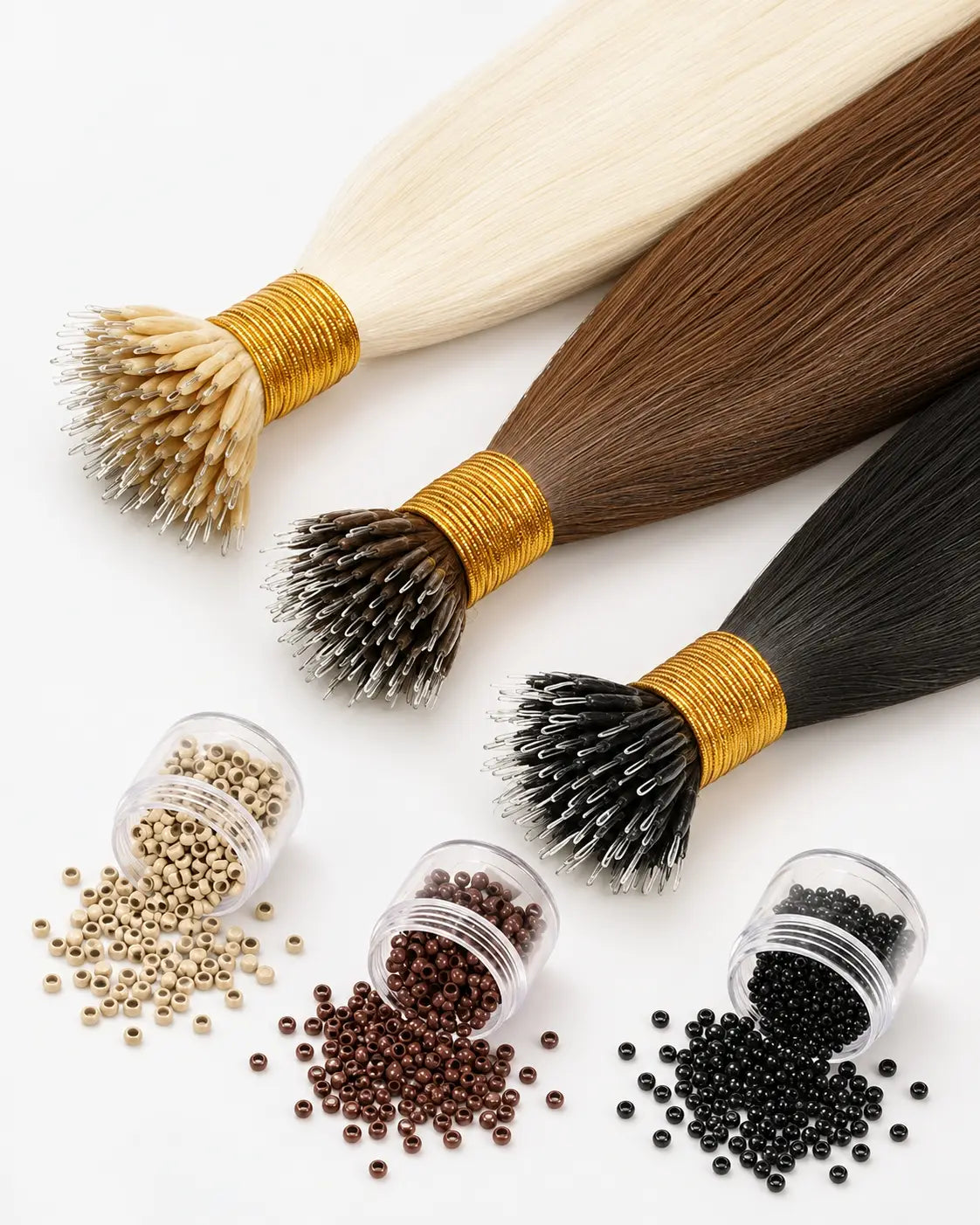
Nano ring hair and micro-bead systems require the beads to be opened correctly before the extension strand can slide away from the natural hair.
Improperly squeezing, twisting or pulling the bead can damage both the extension and your own hair.
These systems are best removed with the correct extension tool by someone who understands the installation method.
After Removal: Don't Panic About Shed Hair
Many people are surprised by the amount of hair they see after removing extensions.
Remember that people naturally shed hair every day.
When you wear semi-permanent extensions, some shed hairs remain trapped inside the attachment instead of falling away normally. When the extensions are finally removed, those hairs become visible all at once.
The important thing is to detangle slowly rather than pulling through the buildup.

How to Care for Your Hair After Extension Removal
Your natural hair may benefit from a short reset after extensions.
Try this simple routine:
1. Detangle first
Start at the ends and gradually move upward.
Never aggressively brush from the root downward through knots.
2. Wash away residue
Use a gentle clarifying shampoo if adhesive, styling product or oil remains in the hair.
3. Deep condition
Apply a moisturizing treatment through the mid-lengths and ends.
4. Reduce heat temporarily
Give your hair a break from excessive flat ironing or curling.
The American Academy of Dermatology recommends limiting excessive heat and hairstyles that repeatedly pull on the hair because both can contribute to damage and breakage.
5. Check your scalp
If you notice:
- Persistent scalp pain
- Broken hairs around attachment areas
- Significant thinning
- Irritation
- Bald patches
stop wearing extensions and consider speaking with a professional stylist or board-certified dermatologist.
How Often Should Hair Extensions Be Removed or Moved Up?
This depends on the extension system and your natural hair growth.
For example, professional brands commonly recommend tape-in maintenance every several weeks. BELLAMI lists approximately 4–8 weeks of wear for several tape-in systems, while Great Lengths notes that tape systems generally need removal or maintenance within a similar range.
Your stylist may recommend a different schedule based on:
- Hair density
- Growth rate
- Extension weight
- Installation method
- Lifestyle
- Home care routine
Do not wait until the extensions are severely grown out or tangled before scheduling maintenance.
When Should You NOT Remove Extensions at Home?
Skip DIY removal and contact a stylist if:
- The extensions are badly tangled or matted
- You cannot clearly see the attachment
- Your scalp hurts
- The bond will not release
- Natural hair appears wrapped around the attachment
- You are wearing sewn-in or professionally bonded extensions
- You are unsure what extension method was installed
Trying to save one salon appointment is not worth damaging your natural hair.
Final Thoughts
Removing hair extensions safely is less about speed and more about protecting the hair underneath.
Tape-ins may be manageable at home when you have the correct remover and work slowly. Bonded, nano and sewn-in systems are more complex and are generally better left to professionals.
Whatever method you wear, remember:
If you feel resistance, pulling or pain, stop.
The best extension experience is not only about how beautiful your hair looks while wearing extensions — it is also about keeping your natural hair healthy when they come out.
Frequently Asked Questions